
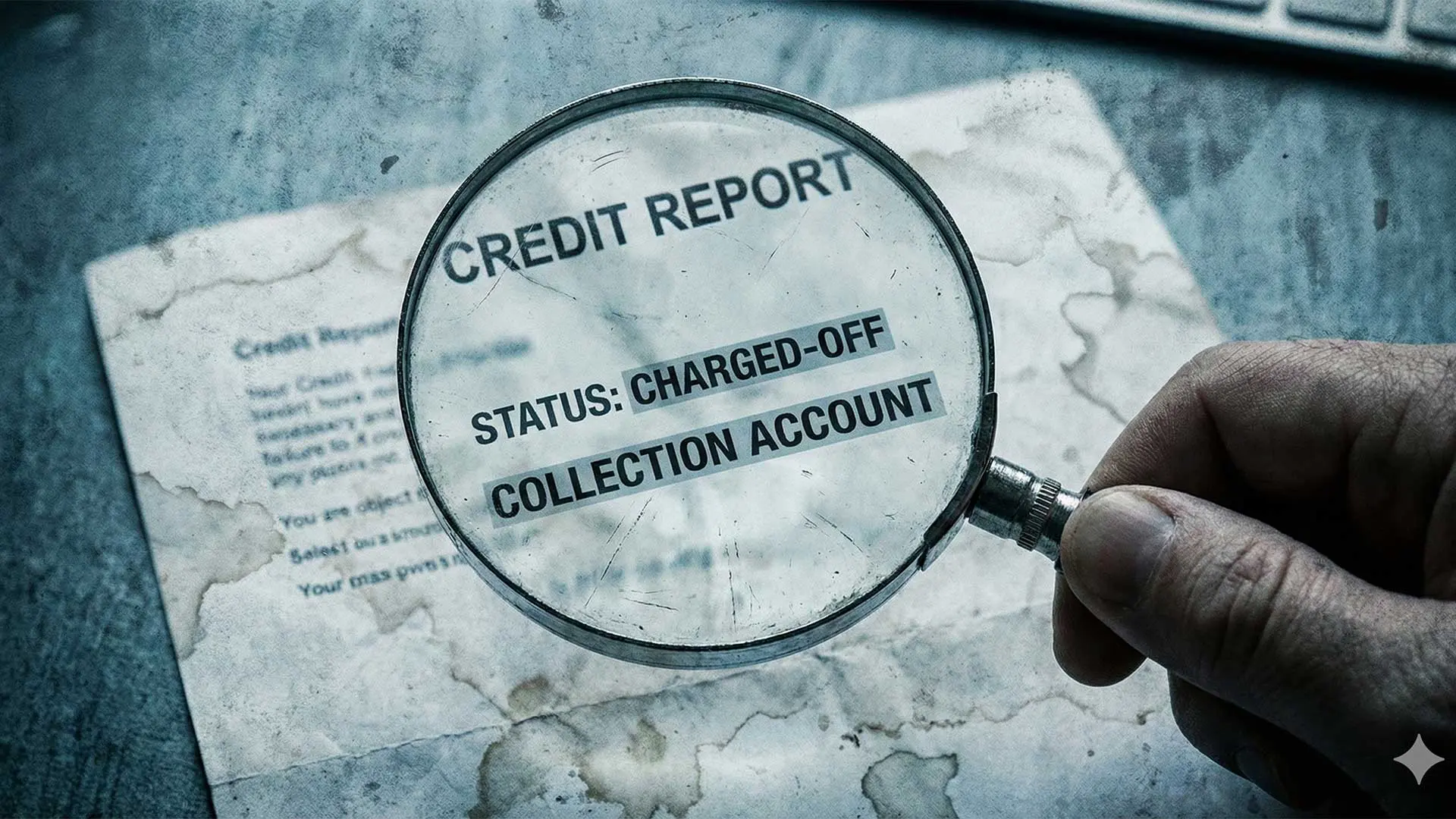
When reviewing a credit report, many residents in Broward County, from Coral Springs to Hollywood, find that charge-offs and collections get lumped together in their minds. They’re both negative, both stressful, and both highly misunderstood.
But they are not the same thing, and understanding the difference matters enormously if you want to fix, restore, and rebuild your credit the right way.
What Is a Charge-Off?
A charge-off happens when an original creditor (like a credit card company or lender) decides your debt is unlikely to be collected and writes it off as a business loss for accounting purposes. This typically occurs after 180 days (6 months) of non-payment.
Key facts about charge-offs:
-
The debt still exists. A charge-off does not mean the debt is forgiven. You still owe the money.
-
The creditor may continue attempting to collect or they may sell the debt to a third party.
-
It shows as a “Charged-Off” status on your credit report, which is a major delinquency.
-
It severely impacts your payment history, which accounts for 35% of your FICO score—the most important factor.
👉 Crucial Note: Even if you later pay a charge-off in full, the status usually updates to “Paid Charge-Off.” While better than “unpaid,” it is still a significant negative item that remains on your report.
What Is a Collection?
A collection occurs when an unpaid debt is sent or sold by the original creditor to a third-party collection agency.
Key facts about collections:
-
It often follows a charge-off, but not always. Some debts like medical bills go straight to collections.
-
The original account (with its charge-off status) may still appear on your report alongside the new collection account.
-
It creates an entirely new negative tradeline on your credit report from the collection agency.
-
Collection agencies report independently to the credit bureaus.
👉 Crucial Note: This means a single debt can cause multiple credit hits if handled incorrectly—once from the original creditor and again from the collector.
Which Hurts Your Credit More?
Short answer: Both hurt severely—but differently.
Charge-Off Impact:
-
Signals a long-term, severe delinquency to lenders.
-
Causes deep, lasting damage to your payment history.
-
Remains on your credit report for 7 years from the date of the first missed payment that led to the charge-off.
-
Is often tied to high balances, negatively impacting your credit utilization.
Collection Impact:
-
Adds another separate negative account to your profile.
-
Triggers immediate risk alerts for lenders in Fort Lauderdale and beyond.
-
Can drop your scores sharply, especially if the collection is recent.
-
Still hurts your score even if the original account is closed and shows a zero balance.
💡 The Worst Scenario: A single debt that results in both a charge-off and a collection, and is then mishandled or reported inaccurately by multiple parties, creating a tangled web of duplicate negative information.
Can You Have Both on One Account?
Yes—and this is where strategic credit cleanup matters most.
A single debt may appear on your report as:
-
Original Creditor Account → Status: Charge-Off / Sold
-
Collection Agency Account → Status: Collection Account
If the reporting is inaccurate, outdated, or improperly duplicated across these entries, it may be disputable under federal consumer protection laws like the FCRA. Paying a collection without a plan can actually lock in negative data instead of helping your score.
Should You Pay a Charge-Off or Collection?
Not automatically. Before making any payment, you must take structured steps:
-
Verify reporting accuracy of both the original and collection accounts through a professional review.
-
Confirm balances and ownership of the debt.
-
Evaluate the statute of limitations for legal collection in Florida.
-
Determine score impact timing—sometimes paying an old collection can “re-age” it and hurt your score temporarily.
-
Create a structured restoration strategy using proven dispute resolution methods.
Random payments = random results. Structure beats speed—every time.
The CORE8 Perspective: Fix. Restore. Rebuild.
At The Core8 Group, we don’t believe in quick fixes, emotional decisions, or generic dispute letters. We focus on a deliberate process for our Broward County clients:
-
Fixing inaccurate, unverifiable, or unfair reporting.
-
Restoring credibility through structured actions and negotiation.
-
Rebuilding profiles that lenders trust for long-term financial goals like buying a home.
Charge-offs and collections require precision, not panic. If you’re dealing with either—or both—the goal isn’t just removal. It’s restoration with intention.

Schedule Your Credit Analysis
Don't Let Old Debts Define Your Future.
Are charge-offs or collections holding you back from your financial goals in Broward County? Don’t guess at the solution. Partner with The Core8 Group for a structured, strategic analysis of your credit profile. We’ll help you determine the best path forward to fix, restore, and rebuild.